

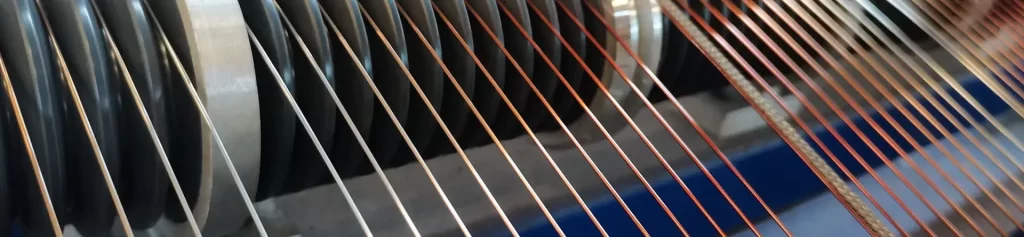
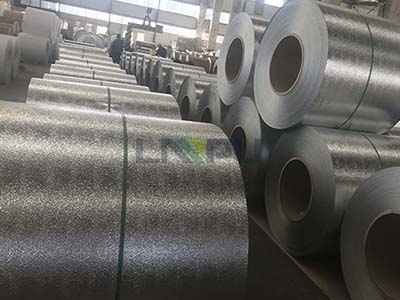
In power transmission and distribution systems, transformers are the core hub, and the selection of winding materials directly determines the efficiency, cost, and service life of transformers. As a high-purity aluminum alloy material, 1070 aluminum foil has become one of the preferred materials for medium and low-voltage transformer windings due to its excellent electrical performance, formability, and cost advantages. This article will comprehensively analyze the application of 1070 aluminum foil in transformer windings from aspects such as material basis, key specifications, core advantages, application scenarios, selection comparison, purchasing skills, production practices, and future trends, providing professional reference for manufacturers and engineers.
I. Introduction: Why 1070 Aluminum Foil Dominates the Transformer Winding Market
1.1 The Core Role of Foil Windings in Modern Transformers
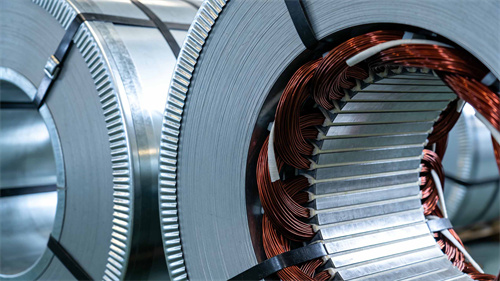
With the development of power systems towards high efficiency and miniaturization, foil windings have gradually replaced traditional round wire windings and become the mainstream form of transformer windings. Compared with round wire windings, foil windings have three core advantages: first, the fill factor is as high as 95% or more, which can effectively utilize the winding space and reduce the volume of the transformer; second, the heat dissipation performance is excellent, and the flat surface of the foil can quickly conduct heat, reduce winding hot spots, and lower losses; third, the short-circuit resistance is strong, and the foil structure has higher mechanical strength, which can withstand the electromagnetic force impact generated by short-circuit current and improve the operational reliability of the transformer.
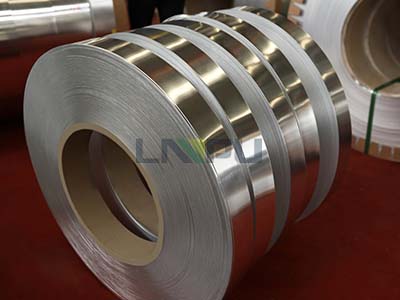
Currently, whether it is dry-type transformers or oil-immersed transformers, in the medium and low-voltage field (0.4-35kV), the application ratio of foil windings has exceeded 60%, and 1070 aluminum foil has become the core material choice for foil windings due to its comprehensive performance.
1.2 Definition and Positioning of 1070 Aluminum Foil
1070 aluminum foil is a high-purity aluminum alloy foil with an aluminum content of up to 99.7%-99.9%, which is an internationally recognized special conductive material for medium and low-voltage transformer windings. Compared with other aluminum alloy foils, the core advantage of 1070 aluminum foil is “balance” — it achieves the optimal ratio between conductivity, formability, and cost. It is not only superior to the electrical performance of low-purity aluminum foils such as 1050 and 1060 but also more cost-effective than 1350 aluminum foil, fully meeting the operational requirements of medium and low-voltage transformers.
For transformer manufacturers, 1070 aluminum foil can not only reduce material costs but also improve production efficiency; for engineers, its stable performance can simplify winding design, reduce the risk of failures, and is the optimal solution that balances performance and economy.
1.3 Preview of the Core Content of This Article
This article will comprehensively analyze 1070 aluminum foil, including: basic material characteristics, key specifications for transformer windings, core application advantages, adaptation schemes for different scenarios, comparative analysis with copper foil and other aluminum foils, quality control points in the purchasing process, practical production skills for windings, troubleshooting of common problems, and future industry development trends, helping readers fully grasp the application essence of 1070 aluminum foil in transformer windings.
II. Material Basis: Analysis of Core Characteristics of 1070 Aluminum Foil
2.1 Alloy Composition and Purity: The Core Factor Determining Electrical Performance
The core competitiveness of 1070 aluminum foil comes from its high-purity composition. According to international standards such as ASTM and EN, its aluminum content is ≥99.7%, and the rest are trace impurities (silicon, iron, copper, zinc, etc.), and the impurity content is strictly controlled within the standard range. This high-purity characteristic has two key impacts:
First, it improves electrical conductivity. The lower the impurity content, the smaller the resistance during electron conduction, and the better the electrical conductivity; second, it enhances corrosion resistance. The surface of high-purity aluminum is prone to form a dense oxide film, which can effectively resist the erosion of transformer internal insulating oil, resin, or the external environment, and extend the service life of the winding.
In contrast, the aluminum content of 1050 and 1060 aluminum foils is only 99.5% and 99.6% respectively, with higher impurity content. Their electrical conductivity and corrosion resistance are slightly inferior to 1070 aluminum foil, and they are only suitable for small transformers with low power and low requirements.
2.2 Temper Designation: O-Temper (Annealed) is the Only Choice
1070 aluminum foil used for transformer windings must be treated with O-temper (annealed), which is determined by the winding production process and operational requirements. O-temper annealing treatment involves heating the aluminum foil to a specific temperature and cooling it slowly, so that the internal grains of the aluminum foil are rearranged to achieve maximum ductility and softness.
Its core advantages are reflected in two aspects: first, excellent formability. The elongation of O-temper 1070 aluminum foil can reach 15%-30%, which can adapt to the high-speed winding of automatic foil winding machines, easily realize tight-radius coil winding, and avoid cracking, breaking and other problems; second, stable performance. After annealing treatment, the electrical and mechanical properties of the aluminum foil are uniform, which can ensure the uniform distribution of winding current and reduce local losses.
It should be noted that although HO-temper (half-hard) 1070 aluminum foil has higher mechanical strength, it has poor ductility and is only suitable for windings with special thickness and special scenarios, which cannot meet the automatic winding needs of conventional transformers, so it is rarely used in transformer windings.
2.3 Key Material Performance Parameters for Transformer Windings
Various performance parameters of 1070 aluminum foil are optimized for the operational needs of transformer windings. The following are the core performance parameters and industry relevance for manufacturers and engineers’ reference:
The core performance parameters and industry relevance of O-temper 1070 aluminum foil are as follows: conductivity ≥62.7% IACS. This parameter directly determines the winding loss; the higher the value, the smaller the I²R loss. Its electrical conductivity is superior to 1050/1060 aluminum foil, which can meet the efficiency requirements of medium and low-voltage transformers; thermal conductivity ≈235 W/(m·K), which can quickly conduct the heat generated by winding operation, reduce the formation of hot spots, avoid insulation aging, and thus improve the service life of the transformer; density is 2.7 g/cm³, only about 1/3 of copper. Using this aluminum foil can reduce the weight of the transformer by 40%-50%, effectively reducing transportation and installation costs, especially suitable for portable and rooftop transformers; tensile strength is between 60-105 MPa, which can balance formability and mechanical strength, not only meeting the tensile requirements during winding but also withstanding the electromagnetic force generated by short-circuit current; corrosion resistance is excellent, which can adapt to the operating environment of oil-immersed and dry-type transformers, resist the erosion of insulating oil, resin, and ambient moisture, and no additional complex anti-corrosion treatment is required.
III. Key Specifications: Core Requirements for 1070 Aluminum Foil for Transformer Windings
Transformer windings have extremely strict requirements on the specifications of 1070 aluminum foil. Failure to meet any index may lead to winding failures, reduced transformer efficiency, and even safety hazards. The following are the key specification requirements for 1070 aluminum foil dedicated to windings, which need to be focused on.
3.1 Dimensional Tolerance: The Basic Guarantee of Winding Quality
Dimensional tolerance directly affects the fill factor, insulation effect, and current distribution of the winding, so the following standards must be strictly followed. The tolerance requirements are different for aluminum foils of different thicknesses and widths:
3.1.1 Thickness Range and Tolerance
The thickness range of 1070 aluminum foil for transformer windings is 0.20-3.00 mm, among which the commonly used thickness for medium and low-voltage transformers (0.4-35kV) is 0.3-1.6 mm. The tolerance requirements corresponding to different thicknesses are as follows:
- Thickness 0.20-0.40 mm: tolerance ±0.02 mm, suitable for low-power, small transformer windings;
- Thickness 0.41-0.80 mm: tolerance ±0.03 mm, suitable for conventional medium and low-voltage transformer LV windings;
- Thickness 0.81-1.10 mm: tolerance ±0.04 mm, suitable for high-power medium and low-voltage transformer windings.
Excessive thickness tolerance will lead to uneven gaps between winding layers, reduced fill factor, and may cause uneven stress on the insulation layer, leading to insulation puncture failures.
3.1.2 Width Range and Tolerance
The width range of 1070 aluminum foil is 15-2200 mm, which can be customized according to the size of the transformer winding. The width tolerance is graded according to the width:
Width ≤100 mm: tolerance ±0.1 mm; width 101-500 mm: tolerance ±0.5 mm; width >500 mm: tolerance ±2 mm. The width tolerance must be strictly controlled to avoid exposure of the winding edge insulation or interlayer misalignment caused by width deviation, which affects the uniformity of conduction.
3.1.3 Edge Quality Requirements
The edge of the aluminum foil must be deburred with rounded transitions, and the burr height ≤0.05 mm. If there are burrs on the edge, they will pierce the insulation layer during winding, leading to winding short circuits; at the same time, the sharp edges will wear the winding machine components, affecting production efficiency.
3.2 Surface and Coating Requirements
3.2.1 Surface Quality Standards
The surface of 1070 aluminum foil must be flat, clean, oil-free, wave-free, scratch-free, and pit-free, which is the key to ensuring the tight fit of the insulation layer. Surface oil will affect the adhesion of insulation materials, leading to insulation layer detachment; surface waves and scratches will cause poor interlayer contact, increase local resistance, and generate hot spots.
During the production process, professional cleaning processes need to be used to remove oil and impurities on the surface of the aluminum foil to ensure that the surface roughness meets the requirements (Ra≤0.8μm).
3.2.2 Optional Coating Requirements
According to the operating environment of the transformer, 1070 aluminum foil can be subjected to targeted coating treatment to improve reliability:
- Oil-immersed transformers: corrosion inhibitors can be applied to enhance the corrosion resistance of aluminum foil in insulating oil and extend the service life of the winding;
- Dry-type transformers: oxide layer enhancement treatment can be performed to improve the stability of the oxide film on the aluminum foil surface and resist the erosion of ambient moisture and resin.
3.3 Mechanical and Electrical Test Standards
To ensure that 1070 aluminum foil meets the requirements of transformer windings, each batch of products must undergo strict testing. The test items and acceptance standards are as follows:
- Conductivity test: detected by an eddy current conductivity meter, conductivity ≥62.7% IACS, and products that do not meet the standards are strictly prohibited from use;
- Mechanical performance test: detect tensile strength and elongation, which must meet the standards of 60-105 MPa and ≥15%;
- Dimensional test: use calibrated thickness gauges and tape measures to detect thickness and width to ensure that the tolerance meets the requirements;
- Surface defect detection: detect by visual inspection or magnifying glass, no oil, scratches, burrs and other defects;
- Insulation compatibility test: conduct compatibility test with common transformer insulation materials (paper, polyester, epoxy mica) to ensure tight fit and no peeling.
All tests must comply with IEC 60208, ASTM B209 standards, and the requirements of the transformer manufacturer’s special winding machine. Test reports must be delivered with the products to ensure traceability.
IV. Core Advantages: The Unique Value of 1070 Aluminum Foil in Transformer Windings
Compared with alternative materials such as copper foil, 1350 aluminum foil, and 1050/1060 aluminum foil, 1070 aluminum foil has irreplaceable advantages in transformer windings, covering multiple dimensions such as electrical performance, cost, production, and reliability, perfectly adapting to the needs of medium and low-voltage transformers.
4.1 Excellent Electrical Performance: Reduce Losses and Improve Efficiency
4.1.1 High Conductivity, Reduce Energy Losses
The conductivity of 1070 aluminum foil is ≥62.7% IACS, which is slightly lower than that of copper foil (100% IACS), but it fully meets the conductive requirements of medium and low-voltage transformers. Compared with 1050/1060 aluminum foil, the conductivity of 1070 aluminum foil is 1.7%-2.7% higher, which can reduce the I²R loss of the winding by 5%-8%. In the long-term operation, it can significantly reduce power waste and improve the energy efficiency level of the transformer.
4.1.2 Uniform Performance, Stable Current Distribution
The high-purity composition and O-temper annealing treatment make the electrical and mechanical properties of 1070 aluminum foil uniform. After being wound into a winding, the current can be uniformly distributed between the foil layers, avoiding local current concentration, reducing the formation of hot spots, slowing down the insulation aging rate, and improving the stability of transformer operation.
4.2 Significant Cost Advantage: Reduce the Total Life Cycle Cost
4.2.1 Lower Material Cost
The material cost of 1070 aluminum foil is 40%-50% lower than that of copper foil with the same cross-sectional area, and 10%-15% lower than that of 1350 aluminum foil. For transformer manufacturers, the use of 1070 aluminum foil can greatly reduce raw material costs and improve product competitiveness, especially suitable for mass-produced medium and low-voltage distribution transformers.
4.2.2 Better Total Life Cycle Cost
In addition to material costs, 1070 aluminum foil can also reduce the total life cycle cost of the transformer: first, it is light in weight, which can reduce transportation and installation costs, especially for rooftop and portable transformers, the advantage is more obvious; second, low loss, long-term operation can reduce electricity expenses. It is estimated that transformers using 1070 aluminum foil can reduce operating costs by 10%-15% annually; third, low maintenance costs. Its excellent corrosion resistance can reduce winding failures and reduce maintenance frequency and costs.
4.2.3 Strong Sustainability, In Line with Environmental Trends
Aluminum is a 100% recyclable material, and only 95% of the energy of primary production is required for recycling and reuse, which is in line with the global trend of carbon neutrality and green development. The high-purity characteristic of 1070 aluminum foil can be directly reprocessed into aluminum foil for transformer windings after recycling, reducing resource waste, helping transformer manufacturers achieve environmental protection goals, and conforming to regulatory requirements such as the EU Green Deal and China’s “dual carbon” policy.
4.3 Excellent Formability: Improve Production Efficiency
4.3.1 Adapt to Automatic Winding
O-temper 1070 aluminum foil has excellent ductility, which can adapt to the production needs of high-speed automatic foil winding machines. During the winding process, there will be no cracking, breaking, wrinkling and other problems, which can greatly improve production efficiency and reduce labor costs. In contrast, copper foil has poor ductility, slow winding speed, and is prone to damage; although 1350 aluminum foil has similar formability to 1070, it is more expensive and not suitable for mass production.
4.3.2 Good Weldability, Reduce Material Waste
1070 aluminum foil can be spliced by friction stir welding (FSW) process. After welding, the performance is stable without obvious joint defects. The remaining aluminum foil coils can be spliced into the required length, reducing material waste by 20%-30%, which is especially suitable for the production of large transformer windings and reducing raw material loss.
4.3.3 Good Insulation Adhesion
The surface of 1070 aluminum foil is flat and smooth, which can be closely attached to insulation materials such as paper, polyester, and epoxy mica without gaps, which can improve the insulation effect, avoid winding short circuits caused by loose or detached insulation layers, and reduce interlayer losses.
4.4 High Reliability: Extend Transformer Service Life
4.4.1 Excellent Corrosion Resistance
The surface of high-purity 1070 aluminum foil is prone to form a dense oxide film, which can effectively resist the erosion of insulating oil in oil-immersed transformers, as well as the impact of resin and ambient moisture in dry-type transformers, and is not prone to corrosion and oxidation, extending the service life of the winding and ensuring the long-term stable operation of the transformer.
4.4.2 Strong Thermal Stability
1070 aluminum foil has excellent thermal stability. At the normal operating temperature of the transformer (Class B 120℃, Class F 155℃), it can maintain stable mechanical and electrical properties, and will not soften or deform due to temperature rise, avoiding winding loosening, short circuits and other failures.
V. Application Scenarios: Adaptation Range and Design Points of 1070 Aluminum Foil
1070 aluminum foil is mainly suitable for medium and low-voltage transformer windings. According to the cooling method, voltage level, and power range of the transformer, its application scenarios are different. At the same time, in the winding design process, it is necessary to optimize combined with the characteristics of 1070 aluminum foil.
5.1 Adaptation Schemes for Different Types of Transformers
1070 aluminum foil is mainly used in 0.4-35kV medium and low-voltage transformers. The adaptation details of different types of transformers are as follows, which can be directly used as a selection reference:
| Transformer Type | Voltage Level | Power Range | Application of 1070 Aluminum Foil | Key Advantages of 1070 Aluminum Foil |
| Dry-type (resin-cast) transformers | LV (0.4-35kV) | ≤4 MVA | Preferred material for LV windings | High fill factor is suitable for compact design; flat surface is easy to fit with resin, improving insulation reliability |
| Oil-immersed transformers | LV/MV (0.4-35kV) | 50 kVA-4 MVA | Main material for LV windings | Corrosion resistance is suitable for the insulating oil environment; lightweight design reduces the overall weight of the transformer |
| Transformers for renewable energy | LV (inverter output) | 100 kVA-2 MVA | Dedicated to solar and wind transformers | Lightweight design is suitable for rooftop and portable installation; low loss meets the high-efficiency requirements of new energy |
| Specialized transformers (rectifiers/reactors) | LV | Customized | Low-loss winding material, suitable for industrial power supplies, inductors and other equipment | Good formability can meet the design of customized coils |
5.2 Core Points of Winding Design
5.2.1 Voltage Level Adaptation Principle
The optimal adaptation voltage of 1070 aluminum foil is 0.4-35kV, which belongs to the medium and low-voltage range. For medium and high-voltage transformers with voltage >35kV, it is recommended to use 1350 aluminum foil or copper foil, because medium and high-voltage transformers have higher requirements for conductivity, and the low-loss characteristics of 1350 aluminum foil (conductivity ≥62.0% IACS) or copper foil can better meet the operational needs; for low-voltage and low-power transformers with voltage <0.4kV, 1050/1060 aluminum foil can be selected according to cost needs. Although its performance is slightly inferior to 1070, it is cheaper.
5.2.2 Coil Length Design Skills
For large transformer windings, if the required aluminum foil length exceeds the length of a single roll of aluminum foil, multiple rolls of 1070 aluminum foil can be spliced by FSW process. The splice must be strictly inspected by welding to ensure no joint defects, avoiding hot spots caused by excessive joint resistance. At the same time, a certain margin should be reserved for the splicing length to reduce material waste during winding.
5.2.3 Insulation Layer Matching Design
The surface characteristics of 1070 aluminum foil determine that it has good adhesion to insulation materials. During design, it is necessary to select suitable insulation materials according to the insulation level of the transformer (polyester insulation paper for Class B, epoxy mica insulation paper for Class F), and the width of the insulation material must match the width of the aluminum foil (±0.5 mm) to avoid exposure of the edge insulation and ensure the insulation effect.
VI. Comparative Analysis: 1070 Aluminum Foil vs. Alternative Materials
In transformer winding materials, the main alternative materials of 1070 aluminum foil include copper foil, 1350 aluminum foil, and 1050/1060 aluminum foil. Different materials have differences in performance, cost, and adaptation scenarios. The following detailed comparison helps manufacturers and engineers make the optimal selection.
6.1 1070 Aluminum Foil vs. Copper Foil: A Trade-off Between Performance and Cost
Copper foil is a traditional transformer winding material with excellent electrical conductivity but high cost; 1070 aluminum foil, as an alternative material, is more cost-effective in the medium and low-voltage field. The specific comparison is as follows:
| Comparison Item | 1070 Aluminum Foil | Copper Foil | Preferred Material |
| Conductivity | ≥62.7% IACS | 100% IACS | Copper foil (but 1070 already meets the needs) |
| Weight | 2.7 g/cm³ (40%-50% lighter than copper foil) | 8.96 g/cm³ | 1070 aluminum foil |
| Material Cost | Low (40%-50% lower than copper foil) | High | 1070 aluminum foil |
| Formability | Excellent (good ductility in O-temper, adaptable to automatic winding) | Good (annealed) | 1070 aluminum foil |
| Corrosion Resistance | Excellent (protected by oxide film, low maintenance cost) | Good (needs electroplating for anti-corrosion) | 1070 aluminum foil |
| Total Life Cycle Cost | Low | High | 1070 aluminum foil |
Summary: In medium and low-voltage transformers (0.4-35kV), the performance of 1070 aluminum foil fully meets the requirements, and it has significant cost advantages, making it the optimal choice; for high-voltage and high-power transformers, copper foil or 1350 aluminum foil can be preferred.
6.2 1070 Aluminum Foil vs. 1350 Aluminum Foil: A Game of Cost-Effectiveness
1350 aluminum foil is also a high-purity aluminum foil (aluminum content ≥99.5%), which is the same as 1070 aluminum foil as a special material for transformer windings. The core differences between the two lie in performance and cost:
- Conductivity: The conductivity of 1350 aluminum foil is ≥62.0% IACS, slightly lower than that of 1070 aluminum foil (62.7% IACS). The difference is small and can be ignored in the medium and low-voltage field;
- Cost: The material cost of 1350 aluminum foil is 10%-15% higher than that of 1070 aluminum foil, and its market supply is small, making it more difficult to purchase;
- Adaptation scenario: 1350 aluminum foil is more suitable for medium and high-voltage transformers above 35kV, and its conductivity advantage can reduce losses during high-voltage operation; 1070 aluminum foil is more suitable for medium and low-voltage transformers with higher cost-effectiveness.
6.3 1070 Aluminum Foil vs. 1050/1060 Aluminum Foil: Performance Improvement
1050 and 1060 aluminum foils are low-purity aluminum foils with aluminum contents of 99.5% and 99.6% respectively. Compared with 1070 aluminum foil, their performance gap is obvious:
- Conductivity: The conductivity of 1050/1060 aluminum foil is ≥61.0% IACS, 1.7%-2.7% lower than that of 1070 aluminum foil, resulting in higher winding losses;
- Formability: The ductility of 1050/1060 aluminum foil is slightly inferior to that of 1070 aluminum foil, which is prone to wrinkling and cracking during winding, and the effect of adapting to automatic winding is poor;
- Adaptation scenario: 1050/1060 aluminum foil is only suitable for low-power, low-requirement small transformers below 50 kVA. Although its cost is slightly lower than 1070, its performance is insufficient to meet the needs of conventional medium and low-voltage transformers.
VII. Conclusion: 1070 Aluminum Foil — The Optimal Choice for Medium and Low-Voltage Transformer Windings
O-temper 1070 aluminum foil has become the optimal material for 0.4-35kV medium and low-voltage dry-type and oil-immersed transformer windings due to its high purity, excellent electrical performance, good formability, significant cost advantages, and high reliability. Its core advantages can be summarized in three points:
- Balanced performance: The high conductivity of 62.7% IACS can effectively reduce winding losses and meet the efficiency requirements of medium and low-voltage transformers; the excellent formability brought by O-temper annealing adapts to automatic winding and improves production efficiency;
- Cost advantage: The material cost is 40%-50% lower than that of copper foil, and the total life cycle cost is better, which can help manufacturers reduce costs and improve product competitiveness;
- High reliability: Excellent corrosion resistance and thermal stability can extend the service life of the winding, ensure the long-term stable operation of the transformer, and reduce maintenance costs.
It should be noted that the application effect of 1070 aluminum foil depends not only on the quality of the material itself but also on links such as procurement, production, and design. Only by strictly following the procurement standards and production practical points described in this article can its advantages be fully exerted.