

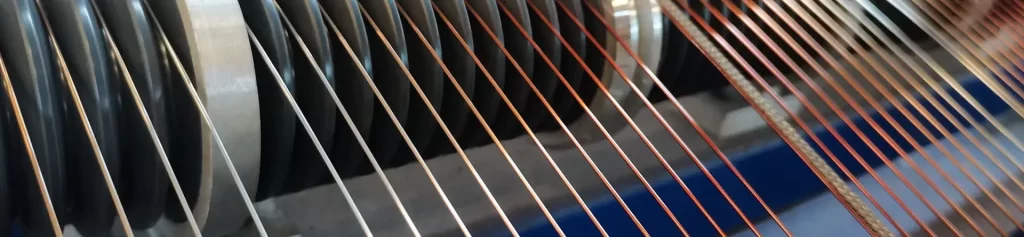
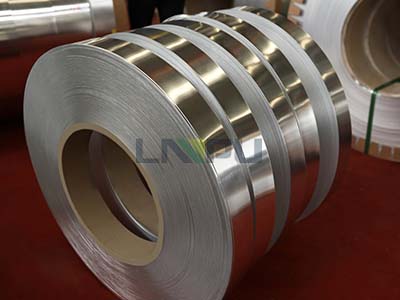
In the high-frequency operating environment of transformers, 1060 aluminum foil not only provides basic conductivity, but also exhibits a superior skin effect compared to larger diameter copper wire. The more uniform current distribution across the cross-section of the aluminum foil winding effectively reduces eddy current losses. Furthermore, the high purity of 1060 aluminum foil ensures extremely low permeability, thereby reducing electromagnetic interference (EMI) within the transformer, which is crucial for precision industrial power grids and medical equipment power supplies. Its stability is not only reflected in its conductivity but also in the microstructural stability it maintains under long-term alternating stress.
1. Core Components and Performance
l High-purity aluminum: 1060 aluminum strip contains ≥99.6% aluminum (some reaching 99.7%), belonging to the pure aluminum series (1000 series), with strictly limited impurity content (iron <0.35%, silicon <0.25%).
l Electrical and thermal conductivity: Electrical conductivity is second only to copper (approximately 62% IACS), and thermal conductivity is excellent (≈230 W/m·K), making it an ideal alternative material for transformer conductors.
l Physical state: Commonly used in the O state (soft state), after annealing, it has high ductility (elongation ≥20%), making it easy to wind and deform without cracking.
- Dimensions:
Thickness:0.2mm to 3.0mm Width:20mm to 1500mm Length :≤12000mm
| Thickness | Nominal Width | |||||
| ≤100 | >100–300 | >300–500 | >500–1250 | >1250–1650 | >1650–2000 | |
| Width Tolerance (+) | ||||||
| >0.20–0.60 | 0.5 | 0.6 | 1 | 3 | 4 | 4 |
| >0.60–1.00 | 0.5 | 0.8 | 1.5 | 3 | 4 | 4 |
| >1.00–3.00 | 0.6 | 1 | 2 | 3 | 4 | 5 |
0.2mm – 0.5mm Foil: Primarily used in small high-frequency electronic transformers and reactors, offering an extremely high fill factor.
0.8mm – 1.5mm Strip: The mainstream choice for low-voltage windings of industrial-grade distribution transformers (10kV-35kV), balancing mechanical strength and winding efficiency.
2.0mm – 3.0mm Thick Strip: Designed specifically for large-capacity special transformers and photovoltaic inverters, meeting the thermal stability requirements under instantaneous high-current surges.
Fatigue life analysis under extreme working conditions:
When a transformer is switched on or experiences load fluctuations, the windings are subjected to severe electrodynamic shocks. 1060 aluminum alloy, in its O-state (annealed state), exhibits excellent stress relaxation characteristics, capable of absorbing minute mechanical vibrations. Research data shows that 1060 aluminum foil, after precision annealing, has a uniformly distributed grain structure, and after undergoing tens of thousands of thermal cycles (40℃ to 120℃), the material’s yield strength decay rate is less than 3%. This material toughness ensures that the transformer windings will not develop microcracks due to metal fatigue under high-load operation or frequent start-stop conditions, fundamentally eliminating the risk of insulation breakdown caused by winding deformation.
2. Key Applications in Transformers
The Revolution of Foil Winding Structure In modern transformer design, 1060 aluminum foil has become the inevitable choice for low-voltage windings, replacing traditional copper wire windings. The resulting “foil winding” structure not only exhibits superior electrical performance but also represents a leap forward in manufacturing processes.
Evolution of Composite Insulation Foil Structure: On the low-voltage side of dry-type transformers, 1060 aluminum foil, through alternating overlap with high-strength polyester film (PET) or aramid paper (Nomex), forms an extremely robust composite insulation system.
Optimized Electromagnetic Performance: The foil structure ensures a highly uniform ampere-turn distribution in the windings, significantly reducing axial forces generated by leakage flux. Compared to traditional round conductors, aluminum foil windings offer higher mechanical strength in the face of sudden short circuits, effectively preventing coil deformation.
Fully Automated Winding Process and Precision Integrated Production: Utilizing advanced foil winding machines, the production line can achieve full automation of the entire process, from aluminum foil unwinding, deionization cleaning, insulation layer lamination, and automatic busbar/lead cold-press welding.
Consistent Quality: This process eliminates the uneven interlayer potential difference problem caused by traditional manual wiring. Through laser alignment and automatic tension control, the winding error of a single coil can be controlled within 0.1mm, significantly reducing the risk of partial discharge and ensuring zero-defect operation throughout the product’s entire life cycle.
Technical Advantages of 1060 Aluminum Strip in Transformers
Short-circuit withstand capability: Aluminum foil windings combined with a cold-rolled silicon steel core enhance mechanical stability.
High conductivity and lightweight: While copper is often mentioned, 1060 aluminum boasts 61% of copper’s conductivity while weighing only one-third as much; this simplifies structural support and significantly reduces transportation costs without sacrificing electrical performance.
Superior surface quality and burr-free edges: High-quality 1060 aluminum strip undergoes precise slitting and edge trimming processes, ensuring smooth, burr-free edges and a clean, oil-free surface.
Excellent heat dissipation: Compared to round conductor windings, aluminum foil has a higher surface area to volume ratio, allowing for faster heat dissipation and extending the lifespan of the insulation material and the transformer itself.
Excellent flexibility (O-state): The “O” state (annealed state) makes the aluminum foil extremely flexible and easy to bend. This flexibility allows for more compact and tighter windings, crucial for reducing the physical size of the transformer.
Mechanical properties :
| Temper | Tensile Strength (Rm/MPa) | Yield Strength (MPa) |
| 1060-O | 60-100 | 15-25 |
| 1060-H12 1060-H24 | 95-135 | 70 |
| 1060-H16 1060-H26 | 110-155 | 75 |
| 1060-H18 | 160 | 85 |
3. Production Process
Manufacturing Flow
Raw Material Control: High-purity aluminum ingot → Melting and casting → Cold rolling to target thickness → Annealing (O-state softening) → Precision slitting (laser guidance).
Quality Inspection: Conductivity testing (≥59% IACS), tensile strength testing, edge defect inspection.
Global Market Compliance and Delivery Assurance:
To meet the stringent requirements of the international transformer market, high-quality 1060 aluminum strip must comply with multiple standards, including ASTM B209, IEC 60317, and GB/T 3880. For export logistics, given the susceptibility of 1060 aluminum to oxidation, we employ a meticulous packaging solution of “vacuum sealing + thickened wooden crates + shockproof pallets” to ensure zero degradation in surface roughness and conductivity during transoceanic transport to markets in Europe, Africa, or Southeast Asia. This comprehensive lifecycle quality control is key to the global recognition of 1060 aluminum alloy in the new energy (such as photovoltaic, wind power, and energy storage) fields.
Chemical Component :
| Elements | Si | Fe | Cu | Mn | Mg | Cr | Zn | Ti | Zr | Al |
| % | 0.25 | 0.35 | 0.05 | 0.03 | 0.03 | – | 0.05 | 0.03 | – | 99.6 |
4. Development Trends and Innovation Directions
Coating Technology: Developing nano-coatings (such as ceramics and graphene) to enhance insulation strength and meet the requirements of high-voltage transformers.
Automation Integration: Precise cutting (±0.1mm tolerance) supports robotic winding, driving intelligent manufacturing.
Sustainability: Aluminum recycling rate >95%, aligning with green energy transition goals.
Summary:1060 aluminum foil strip has become the preferred material for low-voltage windings of dry-type transformers due to its high conductivity, lightweight, cost advantages, and mature automated winding process. Its technological advancements are driving transformers towards higher efficiency, higher reliability, and greater environmental friendliness, with broad application prospects, especially in the field of new energy power equipment (such as photovoltaic inverters and charging piles).