

Transformers are essential components in modern electrical systems. They allow electricity to be transmitted efficiently across power grids, industrial facilities, and electronic equipment. The two most important parts of a transformer are the core and the coils. These components work together to convert voltage levels and transfer energy through electromagnetic induction.
Among all materials used in transformer coils, enameled copper wire (magnet wire) plays a critical role. It ensures efficient conductivity, compact winding structures, and long-term reliability.
This guide explains how transformer cores and coils work, the materials used in transformer windings, and why magnet wire is widely used in transformer coil manufacturing.
What Are Transformer Cores?
The transformer core is the magnetic component that guides the magnetic field generated by the coils. It creates a closed magnetic path so energy can transfer efficiently between the primary and secondary windings.
Without a core, most of the magnetic field would disperse into the surrounding air, causing significant energy losses.
Common Materials for Transformer Cores
Modern transformer cores are usually made from materials with strong magnetic properties, including:
- Grain-oriented silicon steel
- Amorphous metal alloys
- Laminated steel sheets
These materials help reduce energy loss and improve transformer efficiency.
Types of Transformer Core Designs
Several core structures are used in transformer design:
1. Laminated Core
Thin steel sheets are stacked together to reduce eddy current losses.
2. Shell-Type Core
The core surrounds the windings, providing better magnetic shielding and mechanical support.
3. Toroidal Core
A circular core design that minimizes magnetic leakage and noise.
Each design affects transformer efficiency, cooling performance, and manufacturing complexity.
What Are Transformer Coils?
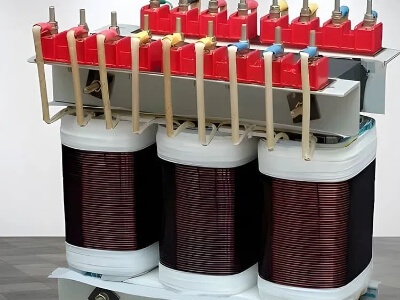
Transformer coils, also known as windings, are conductors wrapped around the core. When alternating current flows through these windings, it generates a magnetic field that transfers energy between circuits.
Transformer windings operate based on electromagnetic induction, where the magnetic field from the primary winding induces voltage in the secondary winding.
Primary Coil
The primary winding receives electrical energy from the power source and generates a magnetic field.
Secondary Coil
The secondary winding converts the magnetic field back into electrical energy at a different voltage level.
The voltage ratio between the primary and secondary coils depends on the number of winding turns.
Why Magnet Wire Is Used in Transformer Coils
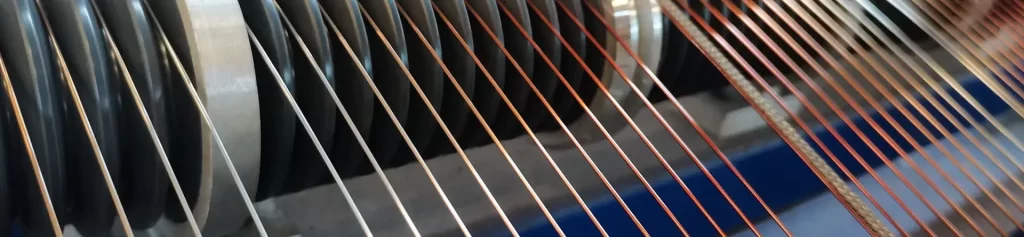
One of the most important materials used in transformer windings is enameled copper wire, also called magnet wire.
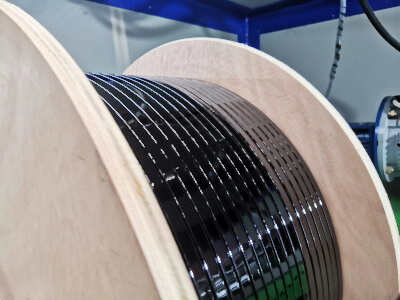
Transformer coils require conductors with excellent electrical conductivity and insulation properties. Copper magnet wire meets these requirements perfectly.
Advantages of Magnet Wire
High Electrical Conductivity
Copper has excellent conductivity, allowing electricity to flow with minimal resistance. This reduces power loss and improves transformer efficiency.
Thin Insulation Layer
Enameled copper wire is coated with a thin insulating layer. This allows more turns to fit into a compact winding space.
High Temperature Resistance
Modern magnet wires use insulation such as:
- Polyesterimide
- Polyamide-imide
- Polyurethane
These coatings allow transformer coils to operate at high temperatures.
Strong Mechanical Strength
During transformer operation, windings experience mechanical stress from electromagnetic forces. Magnet wire provides excellent durability and flexibility.
Types of Magnet Wire Used in Transformer Coils
Different types of magnet wire are used depending on transformer design and operating conditions.
Polyesterimide Enameled Copper Wire
- Thermal class: up to 180°C
- Good chemical resistance
- Widely used in industrial transformers
Polyamide-Imide Overcoated Wire
- High mechanical strength
- Excellent thermal stability
- Used in high-performance transformers
Rectangular Enameled Copper Wire
- Higher slot fill factor
- Suitable for large power transformers
- Allows compact coil structures
Continuously Transposed Cable (CTC)
For large power transformers, CTC conductors made from multiple enameled copper strands are often used to reduce eddy current losses and improve efficiency.
How Transformer Cores and Coils Work Together
Transformer operation relies on the interaction between the core and the coils.
- Alternating current flows through the primary winding.
- This current creates a magnetic field inside the core.
- The core guides the magnetic field to the secondary winding.
- The magnetic field induces voltage in the secondary coil.
This process allows transformers to step up or step down voltage efficiently.
For example:
- A step-up transformer increases voltage for long-distance transmission.
- A step-down transformer reduces voltage for safe residential use.
Factors That Affect Transformer Efficiency
The performance of a transformer depends on several design factors.
Core Material
High-quality core materials reduce hysteresis and eddy current losses.
Coil Design
Optimized winding structures improve magnetic coupling and reduce resistance.
Magnet Wire Quality
High-grade enameled copper wire ensures reliable insulation and long service life.
Cooling System
Transformers generate heat during operation. Cooling methods include:
- Oil-immersed cooling
- Natural air cooling
- Forced air cooling
Proper cooling helps extend transformer lifespan.
Why Are Transformer Cores and Coils So Important?
Transformer cores and coils are the two most critical components that determine the performance, efficiency, and reliability of a transformer. Without these two elements working together, electrical energy cannot be transferred effectively between circuits.
The transformer core provides a controlled path for the magnetic field generated by the windings. It concentrates and directs the magnetic flux so that energy can move efficiently from the primary coil to the secondary coil. High-quality core materials help reduce magnetic losses and improve overall transformer efficiency.
At the same time, transformer coils (windings) are responsible for carrying electrical current and generating the magnetic field required for electromagnetic induction. These coils are typically wound using magnet wire, which combines excellent electrical conductivity with strong insulation.
The quality of the winding conductor directly affects transformer performance. High-grade enameled copper wire for transformer coils ensures:
- Stable electrical conductivity
- Reliable insulation between winding turns
- Efficient heat dissipation
- Long service life under electrical stress
If the winding wire has poor insulation or low conductivity, the transformer may experience overheating, energy loss, or even failure during operation.
In modern transformer design, the combination of high-efficiency transformer cores and high-quality magnet wire windings is essential for achieving optimal electrical performance.
For this reason, transformer manufacturers carefully select both the core material and the transformer winding wire, often using advanced enameled copper wire and rectangular magnet wire to ensure efficient energy transfer and reliable long-term operation.
Choosing the Right Magnet Wire for Transformer Coils
When selecting enameled copper wire for transformer windings, several factors should be considered:
- Thermal class
- Wire diameter or rectangular size
- Insulation type
- Electrical conductivity
- Mechanical strength
Working with an experienced magnet wire manufacturer ensures the best performance and reliability for transformer applications.
Conclusion
Transformer cores and coils form the heart of every transformer. The core guides the magnetic field, while the coils transfer electrical energy between circuits.
Within these coils, enameled copper wire plays a critical role. Its excellent conductivity, strong insulation, and mechanical reliability make it the preferred conductor for transformer windings.
As power systems continue to grow and energy efficiency standards become stricter, high-quality magnet wire will remain essential materials in transformer manufacturing.
For transformer manufacturers and electrical engineers, choosing the right magnet wire solution is key to achieving high performance, efficiency, and long-term reliability.